
Table of Contents
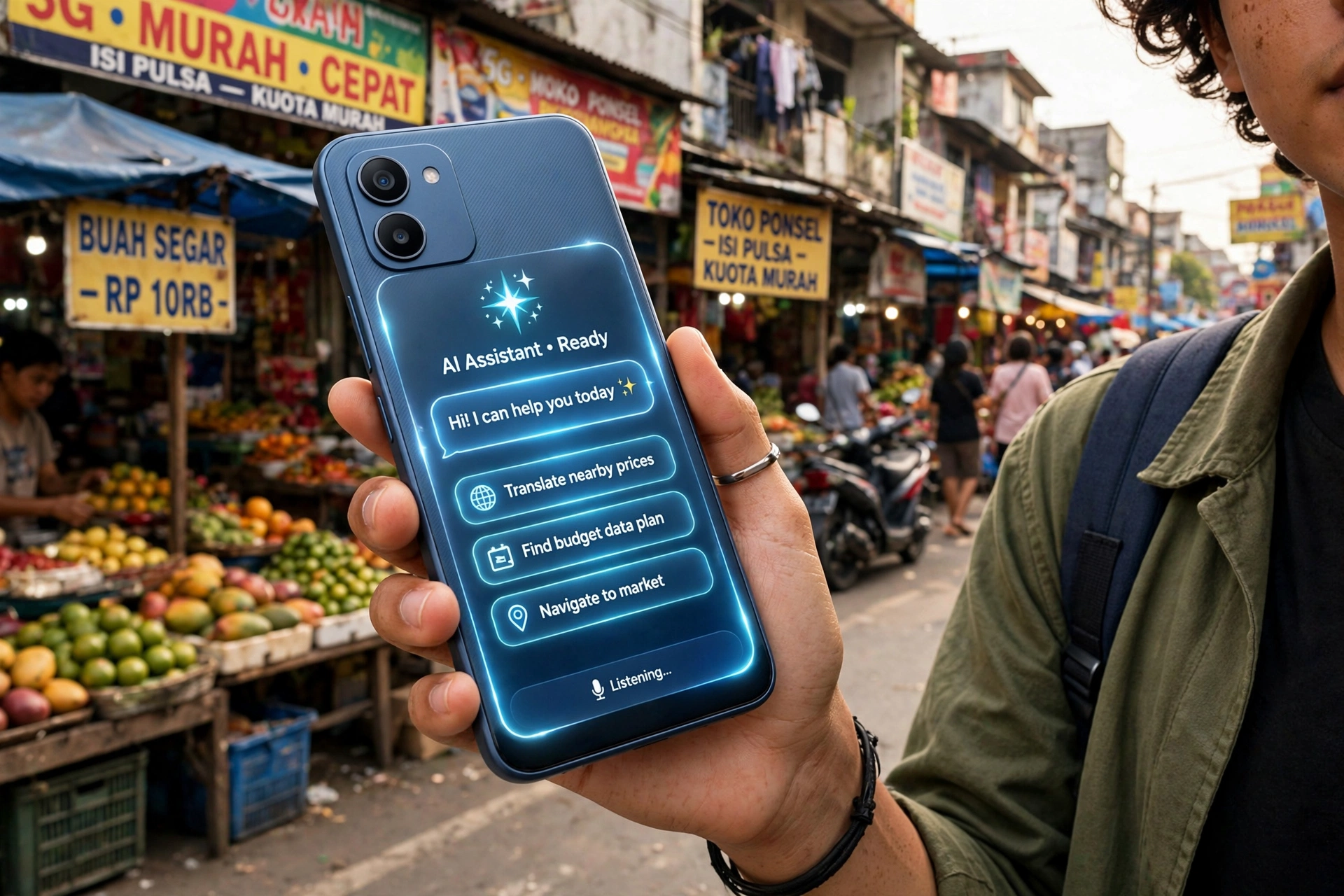
For years, the most impressive artificial intelligence lived on expensive flagship phones and in distant data centres. That is changing fast. Affordable AI smartphones are now bringing powerful on-device features to millions of new users, especially in emerging markets where a phone is often the first — and only — computer a person owns.
The shift matters because price has long decided who gets to use new technology first. Industry warnings about an AI divide underline the stakes: the GSMA has warned of an AI divide without affordable smartphone access, noting that billions of people remain offline or on basic devices despite living within mobile broadband coverage. If AI services require a premium handset and constant cloud access, their benefits will cluster where incomes are already highest.
What on-device AI actually does on a budget phone
On-device AI means the phone itself, rather than a remote server, handles many tasks. Modern entry-level and mid-range chipsets now include dedicated neural processing units that can run smaller, efficient models locally. In practice, users see live translation in a local language, smarter photo enhancement, voice assistants that work with patchy connectivity, call summaries, text drafting help and spam-call detection — without sending every request to the cloud.
That local processing brings three practical advantages. First, speed: answers appear instantly, even on slow networks. Second, cost: less data is consumed, which matters where prepaid data is carefully rationed. Third, privacy: voice, photos and messages can stay on the handset instead of travelling to a server. For a student, trader or health worker, those are not luxury features; they change what the device can do each day.
Why emerging markets feel the impact first
In many parts of Africa, South Asia, Southeast Asia and Latin America, smartphones are banking branches, classrooms, marketplaces and newsrooms at once. A farmer checking crop prices, a shopkeeper accepting mobile payments, or a student revising in a second language all gain when AI can translate, summarise and explain in ways that fit local needs. Local-language models are especially important: an assistant that understands regional languages and accents opens digital services to people whom English-first interfaces left behind.
Manufacturers have responded by competing hard below premium price points. Features once marketed as flagship exclusives — AI erasers for photos, real-time captions, intelligent battery management and on-device transcription — are appearing in mid-range lines within a single product cycle. Retailers report that buyers increasingly ask about AI capability alongside camera quality and battery life, a sign that the feature has moved from novelty to expectation. See also Catchon TV Subscription and IPTV Service Overview for related technology coverage on this site.
The pressures that could slow progress
The trend is not guaranteed. Rising memory and chipset costs, driven partly by demand from AI data centres, are pushing entry-level prices upward. Currency swings, import taxes and limited repair networks can add further cost. There is also a skills gap: powerful features help little if users do not know they exist, or if interfaces ignore local languages, literacy levels and accessibility needs.
What buyers should look for
Shoppers comparing affordable AI phones should check more than a marketing label. Look for a chipset with a genuine neural processor, at least several years of security updates, enough storage for offline language packs, and clear controls for permissions and data sharing. Battery life still matters more than a marginal camera upgrade for most people, and a repairable design with available spare parts will outlast a slightly thinner rival.
A broader definition of progress
The real test of affordable AI is not benchmark scores. It is whether a first-time smartphone owner can get a form translated, a lesson explained, a voice note transcribed and a business message drafted — quickly, privately and without paying flagship prices. On current evidence, that future is arriving, handset by handset. If makers, operators and policymakers keep affordability at the centre, AI could narrow the digital divide instead of widening it.
